
Free 20-minute AI call. Book this week

Logistics and couriers

Move more. Type less.

We help UK logistics, courier and delivery businesses automate the office work behind every job, so planners and drivers spend time moving goods, not re-keying data.

  • Sector-aware delivery
  • UK GDPR-aware
  • Fixed price in GBP
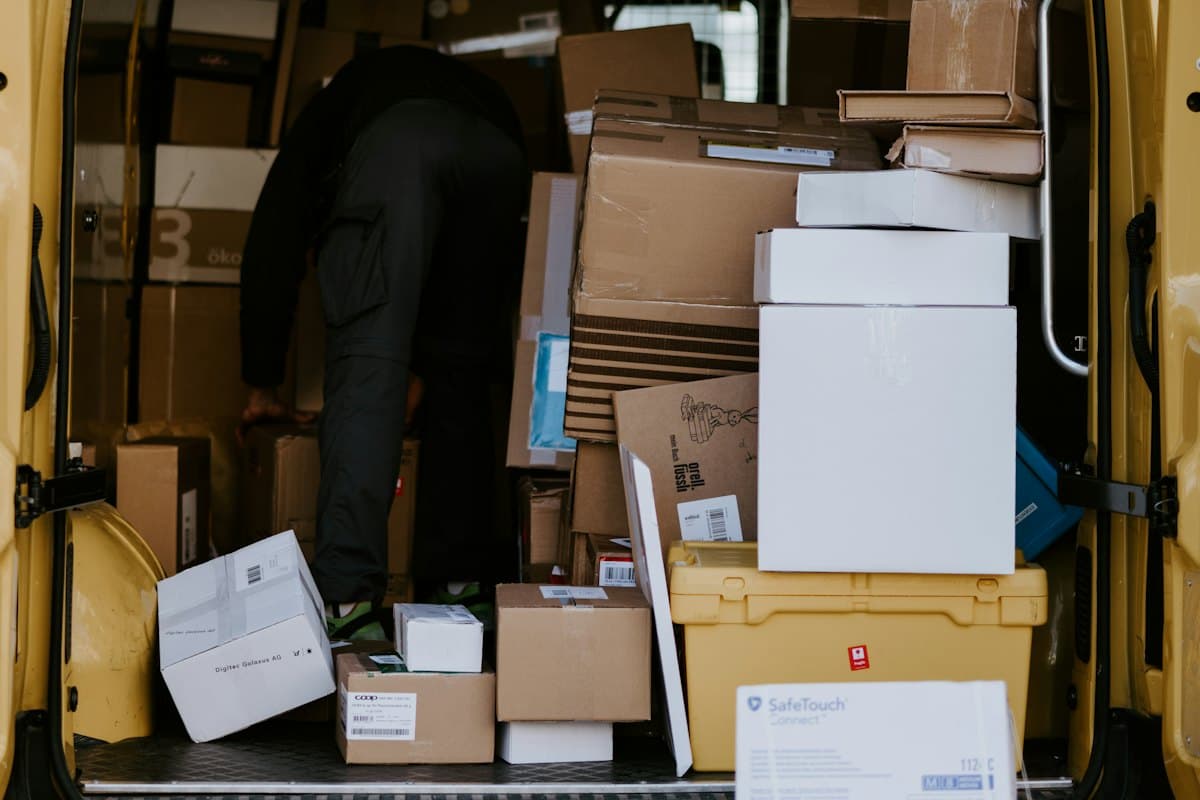
Delivery van and parcels at a UK depot

In short

For UK logistics and courier firms, AI pays back fastest on office admin: reading booking emails and PDFs into your system, chasing proof of delivery, answering where-is-my-parcel queries and reconciling invoices. These tasks are repetitive and rules-based, so automation is reliable and measurable. We connect AI to your existing transport and accounts systems rather than replacing them.

What you get

  • No more re-keying

    Bookings and documents read straight into your systems.

  • Faster customer replies

    Tracking questions answered without a phone call.

  • Cleaner invoicing

    Proof of delivery and charges matched before billing.

What can AI automate in a logistics business?

Most of the paperwork. AI can read booking emails, purchase orders and delivery notes, extract the details and create jobs in your system. It can match proof of delivery to invoices, flag exceptions and answer routine customer tracking questions. People stay on the decisions: pricing, exceptions and customer relationships.

  • Booking emails and PDFs turned into jobs automatically
  • Proof of delivery checks and missing paperwork chasers
  • Where-is-my-delivery assistant connected to your tracking data
  • Invoice and fuel surcharge reconciliation
  • Daily exception reports for planners

Do we need to replace our transport management system?

No. We connect AI and automation to the systems you already use, through their APIs, email inboxes, shared drives or exports. Replacing a TMS is expensive and risky. Automating the work around it is usually faster, cheaper and easier for staff to adopt.

Which tasks give the quickest return?

Booking intake and proof of delivery handling usually pay back first because they are high volume and rules-based. Customer tracking queries come next. Route optimisation can help, but it needs clean data and usually comes later.

Logistics use cases by effort and impact
Use caseEffortLikely impact
Booking email and PDF intakeMediumHigh: hours of re-keying removed daily
Proof of delivery matchingMediumHigh: faster, cleaner invoicing
Customer tracking assistantLow to mediumMedium: fewer calls to the office
Driver document checksLowMedium: fewer compliance gaps
Route and load suggestionsHighMedium to high with good data

How reliable is AI at reading documents?

Very reliable on consistent formats and good on varied ones, provided there are checks. We set confidence thresholds so anything uncertain goes to a person, and we validate key fields such as postcodes, dates and references against your data before a job is created.

Can drivers use it too?

Yes. Drivers can submit proof of delivery photos, defect notes or expense receipts from their phones, and AI files and checks them automatically. That keeps paperwork moving without extra calls to the office and gives planners an accurate picture by the end of the day.

How it works

  1. Free 20-minute call

    Your job flow, systems and biggest admin drains.

  2. Roadmap

    Ranked automations with time saved and cost for each.

  3. Build

    Fixed-price automation connected to your systems.

  4. Launch and support

    Monitoring, tuning and ongoing support.

A good fit if you

  • Courier and same-day delivery firms
  • Haulage and pallet network members
  • Warehousing and fulfilment businesses
  • Office teams re-keying bookings every day

Not the right fit if you

  • Firms wanting a brand-new TMS built from scratch
  • Projects with no access to booking or tracking data
  • Fully autonomous pricing with no human check

Questions people ask

Still unsure? Ask us on a free 20-minute call.

How much time can booking automation save?

It depends on volumes. We measure how long your team spends on bookings today, then estimate the saving in the roadmap before you commit. For high-volume offices, automating intake often removes most of the manual typing, leaving staff to check exceptions only.

Can AI answer customer tracking queries?

Yes. A tracking assistant can read your live tracking data and answer by web chat, email or messaging, handing over to a person when there is a problem. It cuts calls to the office and gives customers answers outside working hours.

Will it work with our existing software?

Usually. We connect through APIs where available and through email, shared folders or scheduled exports where not. We check this during scoping, so you know exactly how integration will work before any build starts.

What happens when the AI gets something wrong?

Anything below a confidence threshold, or failing a validation check, goes to a person for review instead of creating a job. We log every action, so mistakes are easy to trace and the rules can be tightened.

How long does a logistics automation take?

A single workflow, such as booking intake, is typically live in four to eight weeks after scoping, including testing with real documents. Larger programmes are delivered in stages so you see value early.

What does it cost?

Start with our £1,950 + VAT fixed-fee roadmap, which ranks automations by return. Each build is then quoted at a fixed price after scoping. You own what we build, and support is available after launch.

Related

Have a project in mind?

Tell us what slows you down. We reply within one UK business day.